
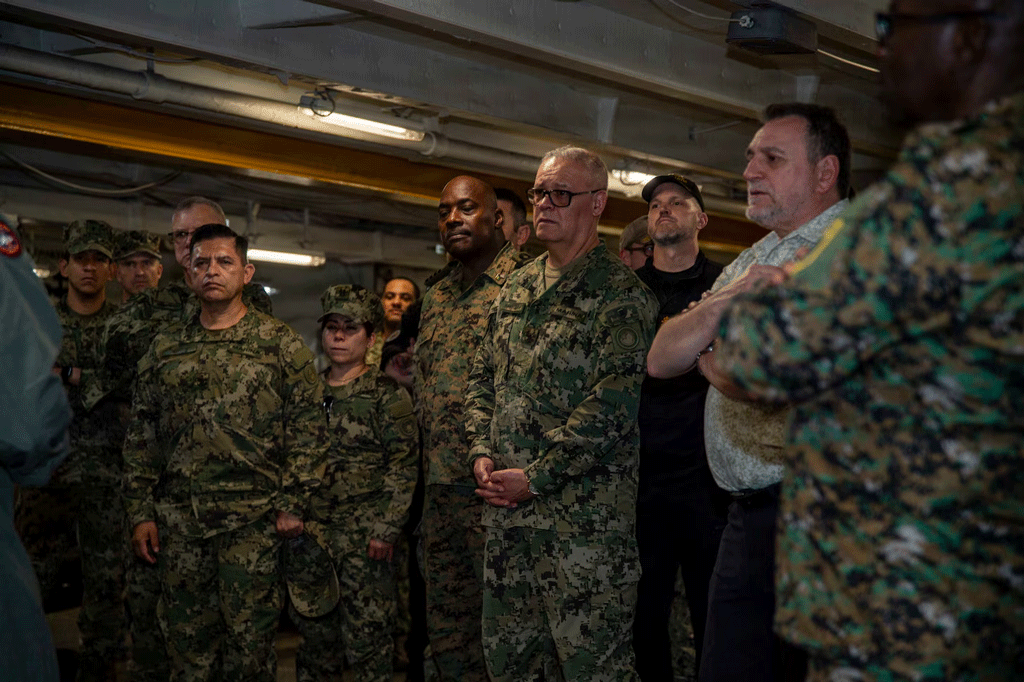
U.S., Canadian, and Mexican maritime leadership from U.S. Naval Forces Northern Command (NAVNORTH), U.S. Coast Guard Atlantic Area (LANTAREA), the Royal Canadian Navy Maritime Component Commander (MCC), and the Mexican Secretariat of the Navy MARINA convened to advance the North American Maritime Security Initiative (NAMSI). The executive meeting brought together key maritime forces to enhance collaboration and strengthen operational effectiveness between the three partner nations.
NAMSI is a trilateral forum to strengthen mutual capacities of operational coordination and increase the security and maritime protection of the North American region established in 2008. Celebrating its 18th anniversary, recent discussions centered on operationalizing the initiative, expanding joint training opportunities, and revising the security and defense strategy to combat transnational criminal organizations. The meeting culminated in the formal signing of the revised NAMSI Handbook by the Heads of Delegation, providing an updated standard operating procedures that enable the effective implementation of international provisions, in order to strengthen the exchange of information to combat illicit acts against the safety of maritime navigation, as well as the prevention of and response to incidents or illicit acts that could threaten the maritime security of North America.
“The complex security challenges in the North American maritime domain require a unified, highly coordinated response,” said Rear Adm. Martin Muckian, Director of Maritime Operations for U.S. Naval Forces Northern Command (NAVNORTH) and executive agent of U.S. Northern Command (NORTHCOM) for NAMSI. “Marking almost two decades of the North American Maritime Security Initiative, the signing of this revised handbook represents our continued dedication to adapting our tactics and strengthening our bonds. Today’s discussions ensure that U.S., Canadian, and Mexican maritime forces remain fully synchronized in our efforts to deter threats and maintain regional stability.”
Complementing the U.S. Navy’s strategic focus, the U.S. Coast Guard emphasized its vital role in merging security and defense operations with maritime law enforcement to ensure all participating services are prepared to respond seamlessly to emerging challenges.
“The Coast Guard operates at the critical intersection of national defense and law enforcement, bringing unique statutory authorities to this critical trilateral partnership,” said Rear Adm. Jay Vann, Deputy Commander of U.S. Coast Guard Atlantic Area. “By integrating our maritime governance capabilities with the defense posture of the U.S. Navy and our Canadian and Mexican partners, we create a seamless maritime shield. This revised handbook ensures we remain vigilant to disrupt transnational criminal networks and protect our shared continent and Western hemisphere.”
Echoing the importance of this integrated defense posture, Canadian maritime leadership highlighted how combined exercises and shared expertise translate directly to operational success across North America’s coasts. “Interoperability with our partners of the United States Navy and Mexican naval forces is essential to safeguarding the continental waters surrounding our respective countries,” said Rear Adm. Josée Kurtz, commander, Maritime Forces Atlantic and Joint Task Force Atlantic, Royal Canadian Navy. “Through NAMSI, the Royal Canadian Navy contributes to strengthening collective readiness and ensuring that our expertise delivers tangible results in operations and exercises at sea. The continued integration and collaboration within NAMSI reflects our shared commitment to a comprehensive approach to maritime security. We are proud to work alongside our long-standing partners in support of our mutual equities at sea.”
U.S. Naval Forces Northern Command is the maritime component of U.S. Northern Command, responsible for executing maritime homeland defense and security operations across the area of responsibility to ensure access, deter aggression, and defend U.S. and partner interests.
