
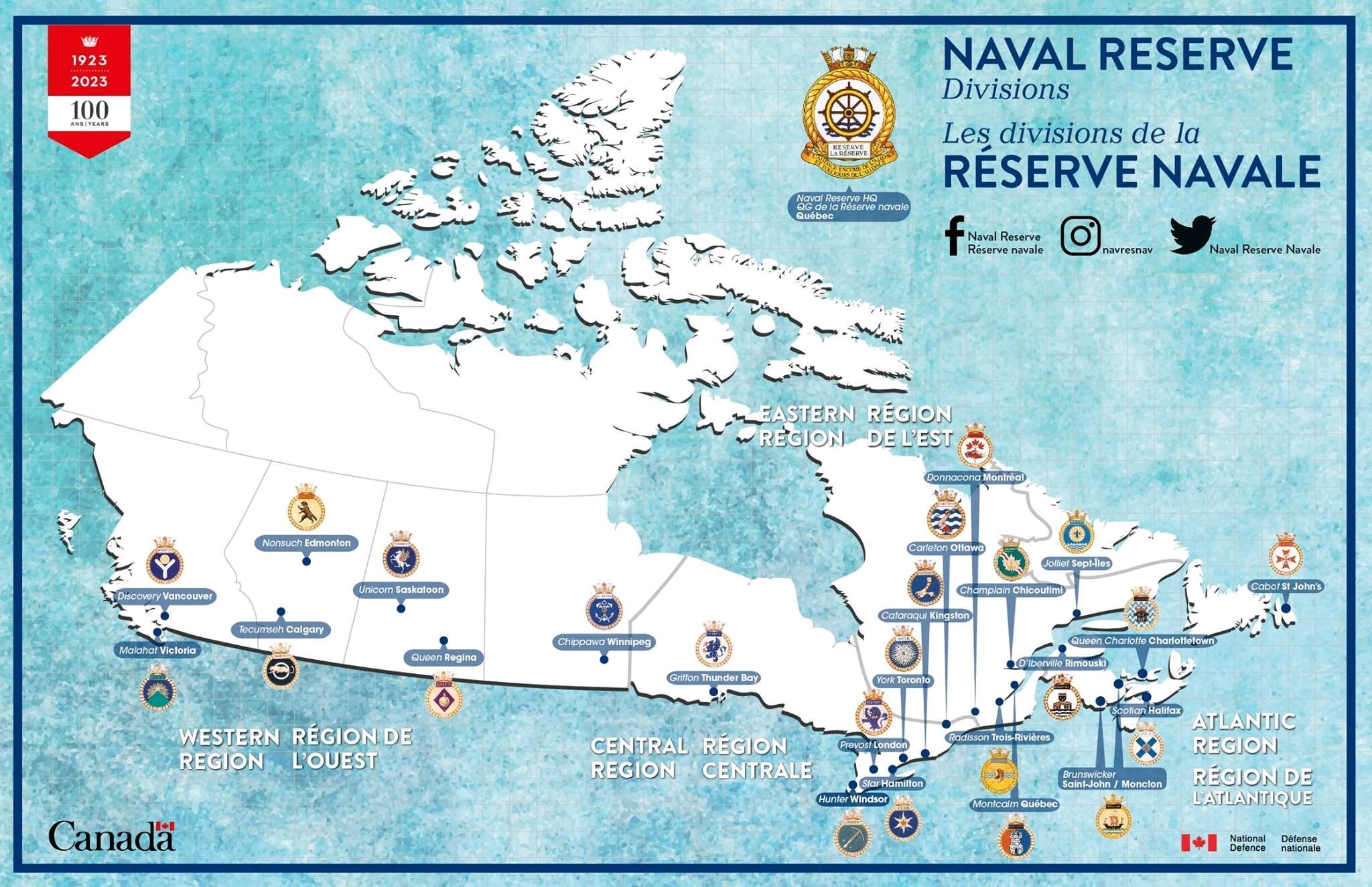
When people think about the Naval Reserve, they often assume it functions much like the Regular Force, with sailors ready to step into operational roles at a moment’s notice. For Lieutenant (Navy) Ross Park, those assumptions are understandable, but they do not always reflect how Reserve service works in practice.
Lt(N) Park joined the Royal Canadian Navy (RCN) in 2016 as a Naval Warfare Officer with HMCS Carleton in Ottawa. Since then, he’s built a career in the Navy alongside full-time work in the federal public service, most recently with the Canadian Coast Guard’s National Command Centre. That dual experience has shaped how he sees the Naval Reserve, not as a mirror of the Regular Force, but as a distinct model built around flexibility, commitment, and competing priorities.
Lt(N) Park highlights one of the most common misconceptions relates to how quickly Reservists reach operational readiness.
“Reservists and Regular Force personnel receive the exact same training, but after that point, skill levels can diverge quite significantly,” he explains.
For many Class A Reservists, trade development happens on evenings, weekends, and during limited training periods, rather than as a full-time professional focus. That structure produces sailors who are trained and adaptable, but whose experience may not always align with those working in their trade every day. As a result, additional mentorship or workups are often required before reaching full operational readiness.
When people think about the Naval Reserve, they often assume it functions much like the Regular Force, with sailors ready to step into operational roles at a moment’s notice. For Lieutenant (Navy) Ross Park, those assumptions are understandable, but they do not always reflect how Reserve service works in practice.
Lt(N) Park joined the Royal Canadian Navy (RCN) in 2016 as a Naval Warfare Officer with HMCS Carleton in Ottawa. Since then, he’s built a career in the Navy alongside full-time work in the federal public service, most recently with the Canadian Coast Guard’s National Command Centre. That dual experience has shaped how he sees the Naval Reserve, not as a mirror of the Regular Force, but as a distinct model built around flexibility, commitment, and competing priorities.
Lt(N) Park highlights one of the most common misconceptions relates to how quickly Reservists reach operational readiness.
“Reservists and Regular Force personnel receive the exact same training, but after that point, skill levels can diverge quite significantly,” he explains.
For many Class A Reservists, trade development happens on evenings, weekends, and during limited training periods, rather than as a full-time professional focus. That structure produces sailors who are trained and adaptable, but whose experience may not always align with those working in their trade every day. As a result, additional mentorship or workups are often required before reaching full operational readiness.
