
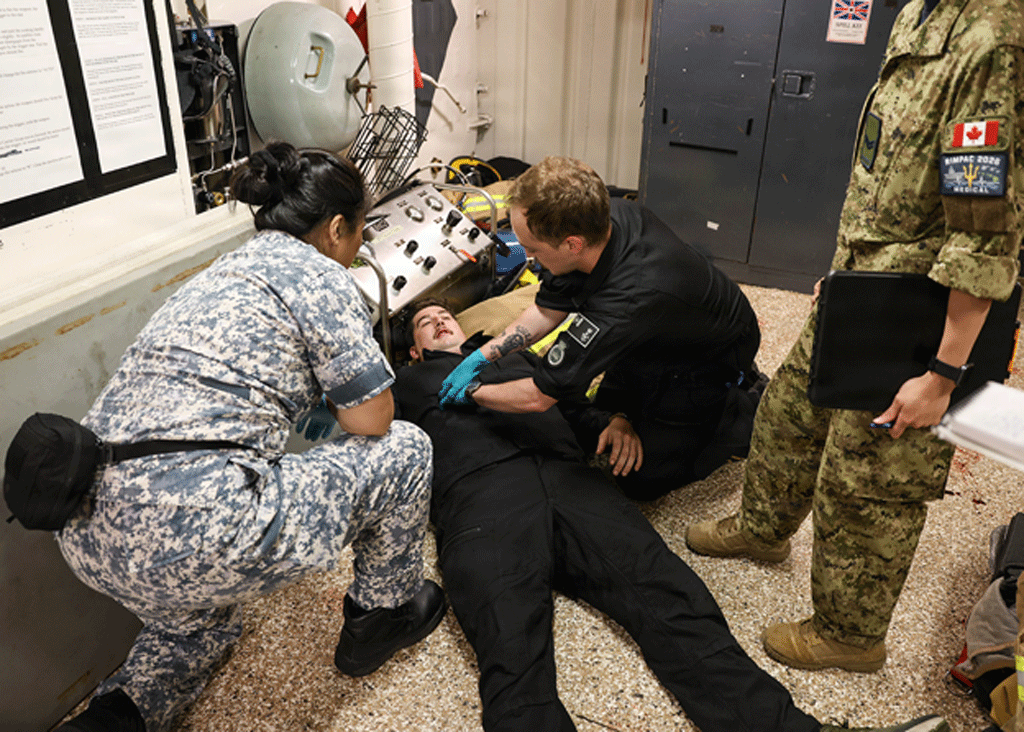
During Rim of the Pacific (RIMPAC) 2026, held from June 24 to July 31, members of the Canadian Forces Health Services Group (CF H Svcs Gp) delivered two serials of a two-day Multinational Maritime Tactical Combat Casualty Care (TCCC) course for non-medical participants.
Led by Canadian Course Director Major (Maj) Lili Zhang, the training brought together students from Australia, Canada, Japan, New Zealand, the Philippines, the Republic of Korea, Singapore, and the United States, along with instructors from Canada, New Zealand, and the United States.
“The instructors have integrated seamlessly with the Canadian instructors, which shows how closely connected our countries are,” said Maj Zhang.
Participants received hands-on training, realistic simulation exercises, and expert instruction in trauma-care skills, earning certification upon successful completion of the course. Training focused on essential life-saving techniques, including wound packing, tourniquet application, airway management, and hypothermia prevention.
While the course can be delivered to various locations, a naval setting provides the most realistic training environment. At RIMPAC, the first day took place at Branch Health Clinic Makalapa on Joint Base Pearl Harbor-Hickam in Honolulu, while the second day was conducted aboard HMCS Ottawa during the exercise’s harbor phase.
Canada is one of only a few nations offering TCCC training specifically adapted to the naval operational environment. “We recognize the importance of enhancing the baseline medical care knowledge of all sailors in order to better prepare them for future naval combat operations,” said Maj Zhang. She noted that the course represents an important step in equipping sailors with the skills needed to provide life-saving care during naval combat operations.
Royal Australian Navy Medical Officer Lieutenant-Commander Patrick Owen highlighted the value of multinational cooperation during the training. “We observed enthusiastic cooperation from all of the partner nations, with everyone willing to get involved and apply the TCCC principles,” he said. “Although language and communication barriers presented some challenges, participants leveraged technology and strong allied relationships to achieve high-quality, standardized patient care.”
Beyond delivering TCCC training, CF H Svcs Gp is supporting RIMPAC through the deployment of a Canadian Medical Emergency Response Team (CMERT) and a surgical team. Canadian medical personnel will also participate in a Humanitarian Assistance and Disaster Response (HA/DR) exercise.
