
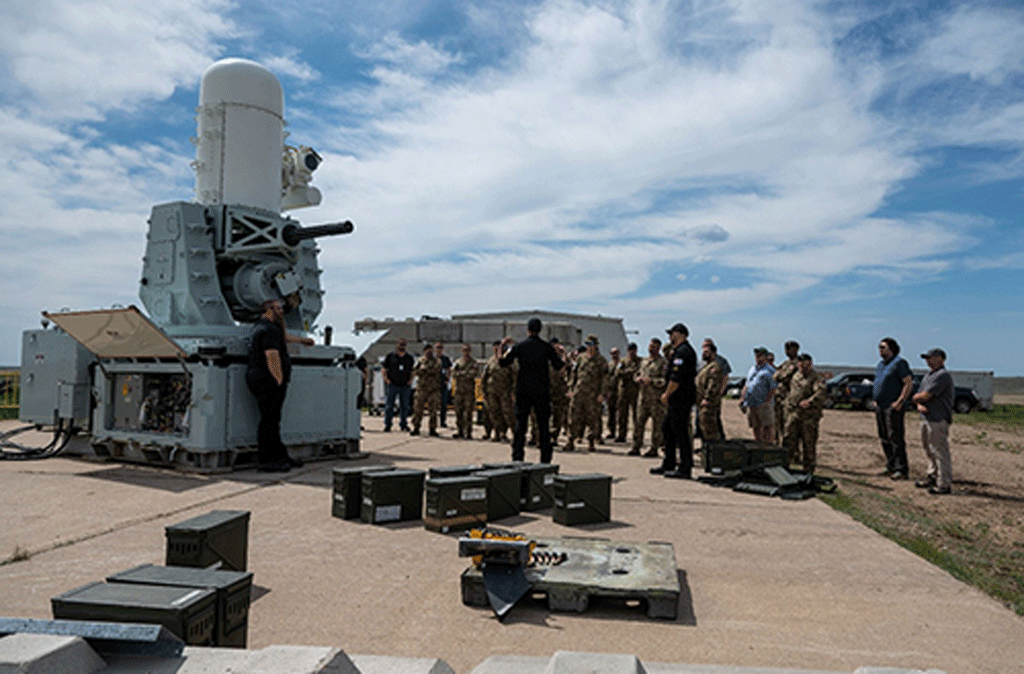
The Phalanx close-in weapons system (CIWS) was introduced by the Royal Canadian Navy (RCN) in the 1980s as part of wider NATO efforts to strengthen fleet protection. During the Cold War, the rise of anti-ship missiles exposed a dangerous gap in naval defenses, warships needed something that could react instantly in the final moments before impact. CIWS filled that role, designed as an automated, rapid-response system capable of identifying and destroying threats when time had nearly run out.
As naval threats evolved, so too has Phalanx. Modern upgrades have enhanced its sensors and targeting systems, allowing it to tackle a wider range of dangers—from traditional missiles to small boats to, recently, uncrewed aerial systems (UAS).
The Canadian Armed Forces recognizes that uncrewed systems have become a persistent and rapidly evolving threat across all operational domains. In response, the RCN is institutionalizing Counter‑UAS (C-UAS) capabilities as an essential component of force protection and operational effectiveness.
From May 19-29, the RCN worked with Defence scientists, engineers, and technologists of the Autonomous and Radiological Technologies Section (ARTS) at Defence Research and Development Canada Suffield Research Center (DRDC SRC), Alberta, to test C-UAS upgrades to the CIWS tracking and fire control as well as assess its terminal effects against a wide variety of UAS and engagement scenarios.
Mounted prominently on Canadian warships, the system combines radar tracking with a high-speed 20 mm Gatling gun, firing thousands of rounds per minute to intercept incoming targets at close range. Its compact, self-contained design allowed it to operate independently, giving crews a reliable safety net if other defensive layers were overwhelmed; the ship’s final guardian in high-threat scenarios. Well known by sailors as the “R2‑D2” due to its white radar dome and distinct shape, its ability to match the emerging C-UAS threat required assessment.
Mounted prominently on Canadian warships, the system combines radar tracking with a high-speed 20 mm Gatling gun, firing thousands of rounds per minute to intercept incoming targets at close range. Its compact, self-contained design allowed it to operate independently, giving crews a reliable safety net if other defensive layers were overwhelmed; the ship’s final guardian in high-threat scenarios. Well known by sailors as the “R2‑D2” due to its white radar dome and distinct shape, its ability to match the emerging C-UAS threat required assessment.
After two days of equipment setup and more than five days of live-fire trials involving thousands of rounds and numerous UAS engagements, the team successfully gathered critical data to better understand the performance, capabilities, and limitations of CIWS in the C-UAS role.
