
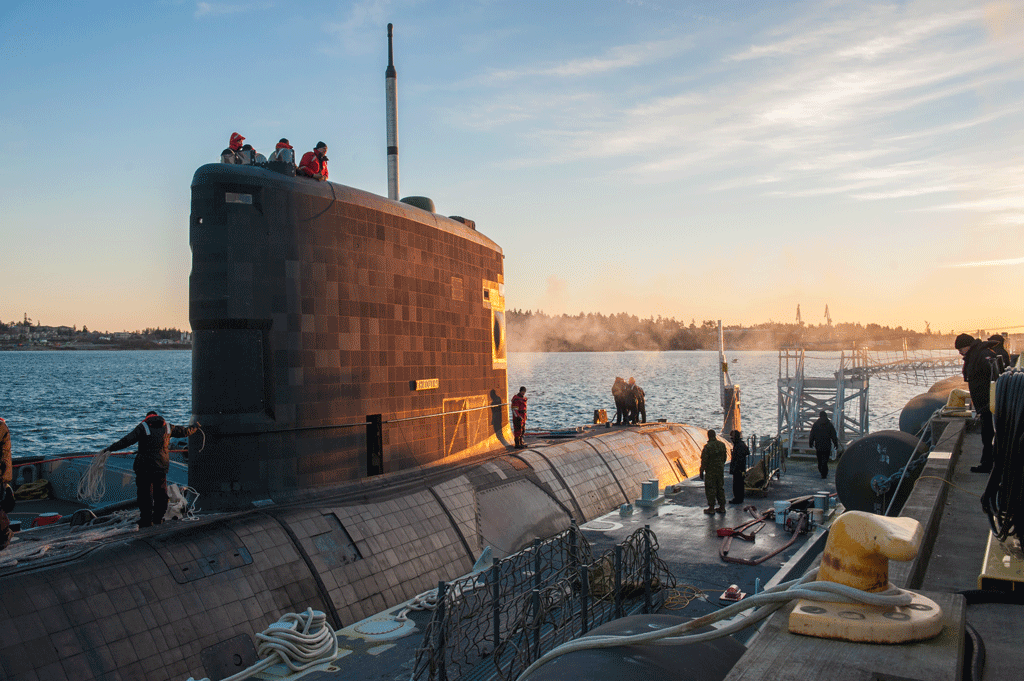
(Grammar and spelling errors are from the source. Photo from the event were taken by Gary Davie in an HMS Montrose helicopter were printed in Ship’s Monthly)
Research Team
Analyst and primary author:
François Thériault, Directorate of Force Health Protection, Department of National Defence
Co-author:
Laura Bogaert, Directorate of Force Health Protection, Department of National Defence
Reviewers:
- Deborah Weiss, Directorate of Force Health Protection, Department of National Defence
- Amy Hall, Research Directorate, Veterans Affairs Canada
- Cdr Brent Jones, Directorate of Force Health Protection, Department of National Defence
Executive Summary
On 05 October 2004, a major electrical fire on board the submarine HMCS CHICOUTIMI claimed the life of one Royal Canadian Navy (RCN) submariner, and exposed the 56 other crewmembers to hazardous smoke. In the following days, 42 members of a Care & Custody Team (CCT) performed additional work inside the smoke-damaged submarine where they were exposed to chemical smoke residues.
In the present study, we compared cancer, mortality, and medical release risk among the 56 surviving crewmembers and 42 CCT members to 152 other RCN submariners who were eligible for at-sea deployments in October 2004. Administrative data from these 250 individuals were extracted from the Canadian Armed Forces pay system, and linked to 2004-2016 data from the Canadian Vital Statistics – Death Database, and to 2004-2015 data from the Canadian Cancer Registry.
On the date of the fire, the surviving crewmembers, CCT members, and control submariners were very similar in terms of rank distribution, age, and cumulative years of service. In the twelve years following the fire, from 05 October 2004 to 31 December 2016, less than five individuals from the entire 250-person study sample died. In the eleven years following the fire, from 05 October 2004 to 31 December 2015, five individuals from the entire 250-person sample had incident cancer diagnoses; five different body regions were affected by these incident cancer diagnoses. The numbers of deaths and incident cancer diagnoses were too low to conduct additional analyses.
In the fifteen years following the fire, from 05 October 2004 to 31 December 2019, the 56 surviving crewmembers experienced medical releases at a rate that was 2.0 times higher than the 152 control submariners. The excess risk among surviving crewmembers was highest from January 2010 to December 2014, five to ten years after the fire, when they were 2.6 times more likely to be medically released than control submariners. The risk of medical release among CCT members was not significantly different than in control submariners.
- Introduction
On 05 October 2004, the Royal Canadian Navy long-range submarine HMCS CHICOUTIMI was sailing on the surface of the Atlantic Ocean with 57 crewmembers on board when an electrical fire engulfed the submarine in thick black smoke. The fire was quickly contained, but several crewmembers suffered smoke inhalation injuries.
The HMCS CHICOUTIMI drifted without power for several hours before being rescued by British ships. Three injured crewmembers were airlifted from HMCS CHICOUTIMI and transferred to hospital in Sligo, Ireland. Sadly, one crewmember, Lt(N) Chris Saunders, died as a result of his smoke inhalation injury. The remaining crew worked and lived aboard the smoke-damaged vessel for the five days it took to be towed back to Faslane Naval Base, Scotland.
At Faslane, a 42-person Care & Custody Team (CCT) from the Canadian Armed Forces (CAF) performed additional work inside the smoke-damaged submarine before transferring it back to Canada. Leftover soot and dust covering surfaces inside the smoke-damaged submarine contained metals, polycyclic aromatic hydrocarbons, dioxins, and furans (Tsekrekos & Lalonde, 2008).
A previous report has already shown that in the first five years following the HMCS CHICOUTIMI fire, the 56 surviving crewmembers were 45 times more likely to be newly diagnosed with post-traumatic stress disorder, 10 times more likely to be diagnosed with asthma, and 7 times more likely to be newly diagnosed with depression, compared to other submariners. Over the same time period, the surviving crewmembers were often unable to go to sea because of a variety of health concerns (CF Health Services Group, 2019).
However, the negative impact of the HMCS CHICOUTIMI fire on the health and wellbeing of surviving crewmembers and CCT members may extend well beyond the 5-year horizon of the aforementioned study. Indeed, crewmembers and CCT members were exposed to carcinogenic chemicals (Tsekrekos & Lalonde, 2008; Kelly, 2002; International Agency for Research on Cancer, 2016). The consequences of acute exposures to such chemicals can take many years to manifest. For example, analyses of the World Trade Centre Health Registry found no conclusive evidence that rescue and recovery workers experienced elevated rates of cancer diagnoses and suicide mortality over the first seven years following the terrorist attacks of September 11, 2001 (Jordan, 2011; Li, 2012). However, an elevated risk of all-site, prostate, skin, and thyroid cancer was detected after 10 years of follow-up (Li 2016), and a statistically elevated risk of suicide only became apparent after 12 years of follow-up, when enough data had been collected over a sufficiently long time period to draw statistically meaningful conclusions (Jordan 2018).
It is therefore important to monitor the long-term cancer and mortality incidence of the 56 crewmembers who survived the HMCS CHICOUTIMI fire and the 42 CCT members who worked in the smoke-damaged submarine after the fire.
- Methods
2.1 Study Design
In this retrospective cohort study, outcomes of interest were identified through existing Department of National Defence (DND) administrative datasets and national registries of cancer and mortality held at Statistics Canada. In epidemiologic studies of occupational exposures, cohort studies ideally examine gradients of exposure rather than simply exposed and un-exposed groups. In the present study, three different groups were included: the crew with presumed highest exposure, the CCT with protected exposure, and the Controls who were unexposed.
2.2 Study Population
The study population consisted of the 56 surviving crewmembers, the 42 CCT members who worked inside the submarine after the fire, and 152 unexposed submariners identified as controls. These 250 individuals were also included in the previous study investigating adverse health outcomes in the first five years following the HMCS CHICOUTIMI fire (CF Health Services Group, 2019).
All 56 surviving crewmembers and all 42 CCT members were males. The control group was therefore selected from male submariners who had completed the CAF Submarine Basic Qualification Course (AILS) and were actively serving in the CAF Regular Force as of 05 October 2004, but were not members of the HMCS CHICOUTIMI crew or the CCT. There were 287 eligible submariners, from which 168 were randomly sampled to achieve a 3:1 ratio with surviving crewmembers. Of these 168 control submariners, 16 were excluded from the final study sample because they were on sick leave or excused duty on 05 October 2004, and would therefore not have been eligible to be on board the HMCS CHICOUTIMI at the time of the fire. The remaining 152 submariners were included as a control group (CF Health Services Group, 2019).
2.3 Administrative Data
Administrative data including name, date of birth, date of enrolment, date of release, and reason for release were obtained from the CAF Directorate of Military Pay and Allowance Processing (DMPAP) for all individuals who received pay for service in the CAF Regular Force or Class C Reserve at any point between 1972 and 2014. As part of the Canadian Forces Cancer and Mortality Study (CFCAMS), (Rolland-Harris, 2018), this large cohort was assembled at DND and released to Statistics Canada, under Section 13 of the Statistics Act, and Section 8(2) (b) of the Privacy Act, for linkage to national cancer and mortality registries, The present study’s 250 subjects were identified in this large cohort file by Statistics Canada analysts. A de-identified database, stripped of personal identifiers, was made available to the study analyst for statistical analysis at Statistics Canada’s Federal Research Data Centre (FRDC) in Ottawa, Ontario.
2.4 Mortality Data
In Canada, it is legally mandatory to report all deaths to provincial or territorial authorities. The Canadian Vital Statistics – Death database (CVSD) is an annual census of deaths in Canada, updated annually with information from provincial and territorial mortality registries. The CVSD contains the date and cause of death for every individual who has died in Canada. Causes of death are classified using codes from the International Classification of Diseases, 10th revision (ICD-10).
Statistics Canada makes the CVSD available at their Research Data Centres to researchers who have an approved research study protocol and ethics for conducting research that requires access to the database.
Dates and causes of death from 05 October 2004 to 31 December 2016 had been previously linked to the administrative records of currently serving and retired CAF personnel, including 249 of the 250 study subjects, and were available for analysis; one CCT member could not be linked to the CVSD because of irregularities in personal identifier data.
2.5 Cancer Data
In Canada, all incident cases of cancer must be reported to the provincial or territorial authorities. The Canadian Cancer Registry (CCR) database is an annual census of all incident cancer cases diagnosed in Canada and is updated with information from provincial and territorial cancer registries. The CCR contains the registration date for all incident cancer cases. It also contains diagnostic information for all incident cancer cases, including morphology, topography, and malignancy, classified using codes from the International Classification of Oncology (ICO).
Statistics Canada makes the CCR available at their Research Data Centres to researchers who have an approved research study protocol and ethics for conducting research that requires access to the database.
Dates and diagnoses of incident cancer cases from 05 October 2004 to 31 December 2015 had been previously linked to the administrative records of currently serving and retired CAF personnel, including 249 of the 250 study subjects, and were available for analysis; one CCT member could not be linked to the CCRD because of irregularities in personal identifier data (the same individual not linked to the CVSD described above).
2.6 Medical Releases Data
Dates and reasons for release from military service from 05 October 2004 to 31 December 2019 were extracted from the DND administrative records of the 250 study subjects. Releases were classified as medically related (3A or 3B release codes) or non-medically related (any other release code).
2.7 Analysis
All deaths in surviving crewmembers, CCT members, and control submariners, from 05 October 2004 to 31 December 2016, were counted. Similarly, all incident cancer diagnoses in surviving crewmembers, CCT members, and control submariners from 05 October 2004 to 31 December 2015 were counted. To protect the confidentiality of study subjects and in accordance with Statistics Canada rules on suppression of small cell sizes, counts of mortality and incident cancer diagnoses were too few to be released from the FRDC, or to be disclosed in this report, and further analyses of mortality and incident cases of cancer could not be conducted.
All medical releases in surviving crewmembers, CCT members, and control submariners, from 05 October 2004 to 31 December 2019, were counted. Incidence rates of medical releases were also computed by 5-year intervals as the number of medical releases observed per 1,000 person-years of military service. Personnel were censored from observation following death or release, and therefore only contributed time at risk of medical release to the analysis when they were in service. Incidence rates were compared for the three groups, using Poisson regression. Finally, the hazards of medical release across the 15-year study period were compared between the three groups using Cox regression.
All analyses were conducted in Stata v16 (StataCorp, 2019).
Ethical Considerations
This study was approved by the Human Research Ethics Board (HREB) of Defence Research and Development Canada (DRDC): protocol number 2020-027.
- Results
3.1 Demographic characteristics at baseline
On the date of the HMCS CHICOUTIMI fire, 05 October 2004, the three study groups were similar in terms of rank, age, and years of service (Table 1). The three groups were 100% male.
Across the three groups, Junior NCMs were the most represented rank category, accounting for 59% of HMCS CHICOUTIMI crewmembers, 43% of CCT members, and 42% of control submariners. Officers were the least represented rank category, accounting for only 14% of HMCS CHICOUTIMI crewmembers, 21% of CCT members, and 20% of control submariners. There were no significant differences in the distribution of rank categories across the three groups; any observed difference could be reasonably explained by chance (p-value = 0.30; see Table 1).
In all three groups, the majority of submariners were between the ages of 35-44 years on the date of the fire. There were no significant differences in the distribution of age categories across the three groups; any observed difference could be reasonably explained by chance (p-value = 0.44; see Table 1). The average age in the control submariners was 37.5 years, which is not significantly different than the average age in HMCS CHICOUTIMI crewmembers (36.6 years; p-value = 0.29) or in CCT members (38.2 years; p-value = 0.49).
On the date of the fire, the majority of submariners from all three groups had already accumulated 10 to 19 years of service. Control submariners had already served for an average of 16.9 years, which is not significantly different than the average service years in HMCS CHICOUTIMI crewmembers (15.4 years; p-value = 0.08) or in CCT members (17.3 years; p-value = 0.72). There were no significant differences in the distribution of years of service categories across the three groups; any observed difference could be reasonably explained by chance (p-value = 0.20; see Table 1).
| Table 1: Demographic characteristics of the three study groups, on 05 October 2004 | ||||
| Crew | CCT | Control | p | |
| Rank | ||||
| Junior NCM | 33 (59%) | 18 (43%) | 64 (42%) | 0.30 |
| Senior NCM | 15 (27%) | 15 (36%) | 57 (38%) | |
| Officer | 8 (14%) | 9 (21%) | 31 (20%) | |
| Age | ||||
| 25-34 years | 22 (39%) | 9 (21%) | 46 (30%) | 0.44 |
| 35-44 years | 29 (52%) | 28 (67%) | 92 (61%) | |
| 45-55 years | 5 (9%) | 5 (12%) | 14 (9%) | |
| Years of Service | ||||
| 3-9 years | 7 (13%) | 7 (17%) | 12 (8%) | 0.20 |
| 10-19 years | 38 (68%) | 21 (50%) | 95 (63%) | |
| 20-33 years | 11 (19%) | 14 (33%) | 45 (29%) | |
| Total | 56 (100%) | 42 (100%) | 152 (100%) | |
*statistically significant (p-value < 0.05)
3.2 Mortality: 12 years following the fire
Over the first 12 years following the HMCS CHICOUTIMI fire, from 05 October 2004 to 31 December 2016, fewer than five individuals from the total study sample of 250 submariners lost their lives. There were too few deaths observed in the study period to make statistical comparisons between HMCS CHICOUTIMI crewmembers, CCT members, and control submariners.
3.3 Incident cancer diagnoses: 11 years following the fire
Over the first 11 years following the HMCS CHICOUTIMI fire, from 05 October 2004 to 31 December 2015, a total of five individuals from the total sample of 250 submariners had an incident cancer diagnosis. Five different body regions were affected by these incident diagnoses. There were too few incident diagnoses observed in the study period to make statistical comparisons between HMCS CHICOUTIMI crewmembers, CCT members, and control submariners.
3.4 Medical releases: 15 years following the fire
Over the first five years following the fire, from 05 October 2004 to 31 December 2009, HMCS CHICOUTIMI crewmembers experienced 28.2 medical releases per 1,000 years of military service, a rate that was 2.4 times higher than the 11.7 medical releases per 1,000 years of military service observed among control submariners; however this 2.4-fold difference is based on too few observations to conclusively rule-out chance, and the results are therefore not considered statistically significant (p-value = 0.10). The rate of medical release among CCT members was also not significantly different than the rate in control submariners (Figure 1; Table 2).
Figure 1: Rates of medical release, per 1,000 person-years of military service, following the HMCS CHICOUTIMI fire on 05 October 2004
Figure 1 – text version
Rates of medical release per 1,000 person-years of military service among crew, CCT, and control groups following the HMCS Chicoutimi fire on 5 October 2004, by time period
- The figure shows rates of medical release, measured per 1,000 person-years of military service, for three groups: crew, CCT, and controls, across three time periods.
- The data are organized by time period, with each period showing the three groups side by side for comparison.
- Looking at the first period, from October 2004 to December 2009, the rate for crew is about 28 per 1,000. For both CCT and the control group, the rate is lower and similar, at about 12 per 1,000.
- In the next period, from January 2010 to December 2014, the rate for crew increases noticeably to about 74 per 1,000. In contrast, CCT remains low at about 10 per 1,000, while the control group increases to about 28 per 1,000.
- In the final period, from January 2015 to December 2019, the rates are closer across groups. Crew decreases to about 40 per 1,000, while CCT increases to about 49 per 1,000 and the control group to about 44 per 1,000.
- Overall, crew has the highest rate in the middle period, while CCT starts low and increases over time. The control group shows a gradual increase across the three periods.
- The estimates vary within each group and period, with wider ranges observed for crew and CCT, particularly in the later periods.
- The only statistically significant difference shown is a higher rate of medical release among crew in the 2010 to 2014 period, compared with the control group in the 2004 to 2009 period.
Over the next five years, from 01 January 2010 to 31 December 2014, the remaining HMCS CHICOUTIMI crewmembers experienced 74.1 medical releases per 1,000 years of military service, a rate that was 2.6 times higher than the 28.5 medical releases per 1,000 years of military service observed among control submariners (p-value = 0.03). The rate of medical release among CCT members was not significantly different than the rate in control submariners (Figure 1; Table 2).
In the study’s most recent five years, from 01 January 2015 to 31 December 2019, the remaining HMCS CHICOUTIMI crewmembers experienced 41.1 medical releases per 1,000 years of military service, a rate that is statistically similar to the 44.4 medical releases per 1,000 years of military service observed among control submariners (p-value = 0.95). The rate of medical release among CCT members was also statistically similar to the rate in control submariners (Figure 1; Table 2).
| Table 2: Rates of medical release, per 1,000 person-years of military service, following the HMCS Chicoutimi fire on 05 October 2004 | ||||
| Rate (per 1,000) | (95% CI) | IRR | (95% CI) | |
| Oct 2004 – Dec 2009 | ||||
| Control Submariners | 11.7 | (5.0, 23.0) | ref | – |
| Crewmembers | 28.2 | (11.3, 58.1) | 2.41 | (0.74, 7.61) |
| CCT members | 11.8 | (1.4, 42.5) | 1.01 | (0.10, 5.04) |
| Jan 2010 – Dec 2014 | ||||
| Control Submariners | 28.5 | (15.2, 48.7) | ref | – |
| Crewmembers | 74.1 | (35.5, 136.2) | 2.60 | (1.02, 6.42) Footnote* |
| CCT members | 9.9 | (0.3, 55.1) | 0.35 | (0.01, 2.31) |
| Jan 2015 – Dec 2019 | ||||
| Control Submariners | 44.4 | (23.0, 77.6) | ref | – |
| Crewmembers | 41.1 | (8.5, 120.1) | 0.92 | (0.17, 3.43) |
| CCT members | 49.0 | (10.1, 143.1) | 1.10 | (0.20, 4.08) |
Footnote 2
statistically significant (p-value < 0.05); IRR, incidence rate ratio
Overall, during the 15-year study period, from 05 October 2004 to 31 December 2019, the risk of medical release was twice as high in HMCS CHICOUTIMI crewmembers as in control submariners (Hazards Ratio = 2.01; 95% CI: 1.15, 3.51; p-value = 0.01). The risk was not significantly different in CCT members compared to control submariners (Hazards Ratio = 0.81; 95% CI: 0.34, 1.94; p-value = 0.64).
Hazard ratios are useful for making comparisons between groups for specific periods of time. In the present study we report the hazard ratios for 5-year periods. Cumulative probability curves, however, illustrate the probability of medical release over time so that risk can be assessed at any point in time during the 15-year study period. Figure 2 presents the inverse Kaplan-Meier probability curves for the three study groups. It demonstrates that the risk of medical release is increased substantially for crewmembers at about 56 months (4.5 years) following the fire, while the risk plateaued at the same time for members of the CCT and controls.
Figure 2: Inverted Kaplan-Meier curves illustrating cumulative medical release probability among still-serving submariners, following the HMCS Chicoutimi fire on 05 October 2004
Figure 2 – text version
Cumulative probability of medical release among still-serving personnel over time since the HMCS Chicoutimi fire on 5 October 2004, shown using inverted Kaplan–Meier curves for crew, CCT, and control groups
- The figure shows the cumulative probability of medical release, expressed as a percentage, among still-serving personnel over time since the fire, measured in months, for three groups: crew, CCT, and controls.
- All three groups start near 0% at the beginning. Over time, the probability increases for each group, but at different rates.
- In the early period, up to about 50 months, the probabilities remain low and similar across groups, staying below about 5%.
- After about 50 months, the crew group begins to increase more quickly than the others. By around 75 months, the cumulative probability for crew reaches approximately 20%, while CCT and control remain lower, at around 5% to 7%.
- Between about 75 and 125 months, the crew group continues to rise steadily, reaching roughly 40% by around 120 to 125 months. Over the same interval, the control group increases more gradually to about 15% to 20%, while CCT remains lower, generally below 15%.
- After about 125 months, all groups continue to increase. By approximately 150 months, crew is around 45%, control is around 25%, and CCT is around 20%.
- By the end of follow-up, at approximately 175 to 180 months, crew has the highest cumulative probability at about 55%. The control group reaches about 35% to 37%, and CCT reaches about 30% to 33%.
- Overall, the crew group shows a consistently higher and earlier increase in cumulative probability of medical release compared to the other groups. The control group shows a steady, moderate increase over time, while CCT increases more slowly and remains the lowest for most of the follow-up period, with some convergence toward the end.
By 31 December 2019 the cumulative risk of medical release for crewmembers was 55% compared to approximately 38% for controls and 34% for members of the CCT (Figure 2).
- Discussion
This study was the first to assess long-term impacts of the fire aboard HMCS CHICOUTIMI on surviving crewmembers and CCT members. In the sections that follow we provide a summary of the interpretation of the findings and limitations of this study.
4.1 Interpretation
Statistical analyses of mortality and cancer data were not possible because of too few cases: fewer than five deaths and five incidence cancer cases, each from different body regions. Therefore risk of mortality and cancers could not be assessed. The impact of acute occupational exposures can take varying periods, sometimes years or decades, to manifest into a clinical outcome. Cancers, in particular, can have long latency and take decades to result in a diagnosis. The low case count of cancers could indicate low risk, or could indicate that longer latency is required to observe an increased risk. Regardless, based on 12 and 11 years of follow up, respectively, it was not possible to conduct analyses for mortality or cancer outcomes.
Cancer is a very common class of diseases and the leading cause of death in Canada. An estimated 40% of Canadians will be diagnosed with cancer in their lifetime, and about 20% of Canadians will die from cancer (Canadian Cancer Statistics, 2022). Epidemiological surveillance over a long time period would be needed to assess if future cancers observed in the study cohort could be related to the fire aboard HMCS CHICOUTIMI.
4.2 Study Limitations
The key study limitation, from a statistical perspective, is the small size of the study groups. Small sample size limits the ability to establish statistical significance, making it difficult to draw conclusions from analyses. This is especially true for rare outcomes. In addition to the small sample size, the relatively short follow-up period for typically long latency outcomes is a key limitation.
A further limitation is the long delay for Statistics Canada to acquire and make available the nation-wide mortality and incident cancer case data. At the time of analysis 15 years of CAF release data was available from DND, yet only 12 years of mortality data and 11 years of cancer data were available through Statistics Canada. The delay in availability of data inhibits our ability as researchers to conduct timely analyses and assess long-term health outcomes.
4.3 Future Research
The present study used all available data at the time of analysis. As more years of data become available over time, it may be advisable to update the CF Cancer and Mortality Study (CFCAMS) cohort so that additional years of follow up for mortality and cancer can be added.
The health and wellbeing of the crew and CCT are also being assessed over time using qualitative research methods, through interviews and surveys, by another research group within the Department of National Defence. Updates on that work are provided on an ongoing basis at quarterly meetings and results will be made public when the research is complete.
- Conclusion
The present study expands on the previously documented short-term health effects associated with the HMCS CHICOUTIMI fire. The risk of medical release was found to be statistically higher among crewmembers compared to the study controls overall during the 15-year study period, and also in the six to ten year period following the fire, and not statistically different in the first five year period or in the eleven to fifteen year period following the fire. The risk of medical release among CCT members was not significantly different than in control submariners. The risk of mortality and cancer could not be statistically assessed because of too few cases in the years of data available at time of data analysis.
Epidemiological assessment of the crew and CCT in comparison to the control submariners will continue through the ongoing CFCAMS as additional years of data for mortality and incident cancer diagnoses are made available by Statistics Canada.
References
CF Health Services Group. 2019. HMCS CHICOUTIMI Health Surveillance Study. Department of National Defence, Ottawa.
Canadian Cancer Statistics Advisory in collaboration with the Canadian Cancer Society, Statistics Canada and the Public Health Agency of Canada. Canadian Cancer Statistics: A 2022 special report on cancer prevalence. Toronto, ON: Canadian Cancer Society; 2022. Available at: www.cancer.ca/Canadian-Cancer-Statistics-2022-EN (accessed April 2023).
International Agency for Research on Cancer. 2016. Polychlorinated Biphenyls and Polybrominated Biphenyls, Volume 107. IARC Monographs. World Health Organization. Lyon, France. ISBN 978 92 832 0173 1.
Jordan HT, Brackbill RM, Cone JE, Debchoudhury I, Farfel MR, Greene CM, et al. 2011. Mortality among survivors of the Sept 11, 2001, World Trade Center disaster: results from the World Trade Center Health Registry cohort. Lancet. 378(9794): 879-887.
Jordan HT, Stein CR, Li J, Cone JE, Stayner L, Hadler Jl, et al. 2018. Mortality among rescue and recovery workers and community members exposed to the September 11, 2001 World Trade Center terrorist attacks, 2003-2014. Environ Res. 163: 270-279.
Li J, Cone JE, Kahn AR, Brackbill RM, Farfel MR, Greene CM, et al. 2012. Association between World Trade Center exposure and excess cancer risk. JAMA. 308(23): 2479-2488.
Li J, Brackbill RM, Liao TS, Qiao B, Cone JE, Farfel MR, et al. 2016. Ten-year cancer incidence in rescue/recovery workers and civilians exposed to the September 11, 2001 terrorist attacks on the World Trade Center. Am J Ind Med. 59(9): 709-721.
Rolland-Harris E, VanTil L, Zamorski MA, Boulos D, Reicker A, Masoud H, et al. 2018. The Canadian Forces Cancer and Mortality Study II: a longitudinal record-linkage study protocol. CMAJ Open. 6(4): e619-e627.
StataCorp. 2019. Stata Statistical Software: Release 16. College Station, TX: StataCorp LLC.
Tsekrekos S, Lalonde J. 2008. HMCS CHICOUTIMI Fire Incident of 5 October 2014: Potential Chemical Exposures and Health Consequences. Department of National Defence, Ottawa.
Charlottetown Assists Philippine ASW Training
1208 U.S. Navy photo by Mass Communication Specialist 2nd Class Quentin Todd
The Philippine Navy (PN) on Monday said it is committed to improving its “anti-submarine warfare” (ASW) capabilities as part of its efforts to safeguard the country’s “sea lines of communications.”
“Sea lines of communication” refers to primary maritime routes between ports used for trade, logistics, and deployment of naval forces.
Improving the PN’s ASW capabilities is also a “fundamental component of a modern, multi-domain and self-reliant maritime defense strategy,” PN public affairs office chief Captain Marie Angelica DC Sisican told the Philippine News Agency.
“The ability to independently detect, track, and respond to undersea threats is important for safeguarding sea lines of communication, defending territorial waters, and ensuring the survivability of naval forces during operations,” she added.
Sisican said this is now being done with the development of an organic ASW capability that encompasses shipboard systems, naval aviation, and fixed undersea sensors to ensure the protection of the country’s maritime domain.
“Based on ASW concepts, effective ASW requires coordinated and persistent capabilities to counter the inherent advantages of submarines,” she stressed.
The PN public affairs office chief added that an organic ASW capability also enables “timely action without reliance on external support to form a layered defense through the integration of surface, air, and subsurface sensors and weapons.’
This development is highlighted by the acquisition of naval assets with ASW capabilities like the Jose Rizal-class guided missile frigates, the larger Miguel Malvar frigates, AW-159 “Wildcat” ASW helicopters, and six brand-new offshore patrol vessels, which are now in the process of being delivered to the PN, and other equipment and weapons platforms dedicated to anti-submarine operations.
During the recently concluded “Balikatan” exercises, the PN, along with other participating navies, demonstrated its ASW capabilities and interoperability as they detected and tracked a subsurface contact under realistic conditions within the exercise area in the West Philippine Sea.
This took place during the “multinational maritime events” (MME) of the Balikatan from April 20 to May 1.
The detection was made during the “anti-submarine warfare exercise” of the MME, which included PN vessels BRP Antonio Luna (FFG-15) and BRP Miguel Malvar (FFG-6), JS Ikazuchi (DD-107), HMAS Toowoomba (FFH-156), HMCS Charlottetown (FFH-339), and USCGC Midgett (WMSL-757).
The PN said the activity reflected increasingly complex and operationally relevant training designed to prepare naval forces for evolving maritime challenges while reinforcing cooperation and adherence to international law.
