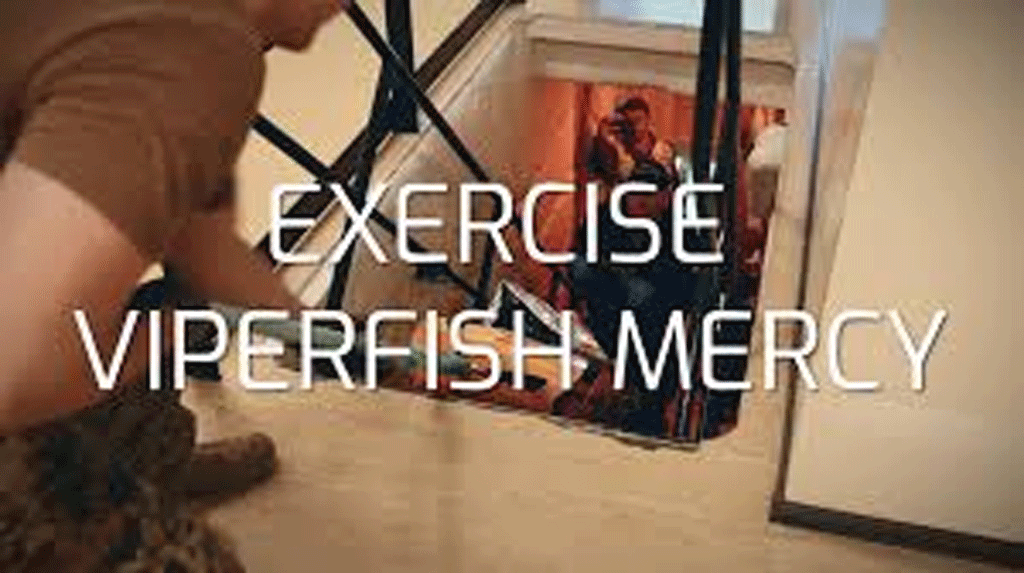
Held annually and rotating between Esquimalt and Halifax, Exercise VIPERFISH MERCY 2026 combines realistic rescue scenarios with specialized medical training. This year’s practical phase culminated aboard HMCS Max Bernays in Esquimalt, where participants coordinated and managed a complex simulated submarine emergency.
From October 23 to 30, 2026, military medical professionals, sailors, and international partners participated in an intensive scenario-based training designed to prepare responders for one of the most challenging emergencies at sea: a distressed submarine. The exercise enabled military medical teams to rehearse life-saving responses to simulated submarine emergencies.
VIPERFISH MERCY 2026 is embedded within the Canadian Armed Forces (CAF) Submarine Medicine Course, which provides military physicians with specialized training to care for submariners. Through classroom instruction and simulations, participants gained firsthand experience treating patients in demanding operational conditions. Training took place aboard HMCS Max Bernays, which was equipped with onboard triage and treatment facilities.
International collaboration remained a key feature of the exercise. “This year, we had nine students on the course: five from the CAF, one from Singapore, one from the Netherlands and two from Australia,” said Lieutenant Commander (LCDR) Natalie Ouellette, Senior Medical Advisor to the Canadian Submarine Forces and Course Director for the Submarine Medicine Course.
“We also had support staff from the US Navy and the Royal Navy,” she said.
Congratulations to the students who were certified in submarine medicine through this unique experience.
The multinational environment strengthened relationships, shared expertise, and improved interoperability among partner nations.
The final scenario challenged medical teams to simultaneously care for 40 simulated casualties in a realistic maritime environment. Participants practiced casualty movement, triage, treatment, and medical coordination while operating under time constraints, replicating conditions they could face during a real-world submarine rescue.
The exercise also included two recompression chambers used to treat simulated casualties following their rescue.
“A submarine, normally, is at the same pressure that we are here at the surface,” LCDR Ouellette explained.
“If they are in a disabled situation or they are sunk on the bottom, it’s possible that the pressure inside the submarine will increase, and at that point they become like divers,” she said.
“So, casualties need to be decompressed when they come to the surface and we do that by using Hyperbaric Chambers,” she added.
Beyond medical training, Ex VIPERFISH MERCY 2026 also tested Canada’s command-and-control framework for responding to a submarine emergency.
As the Royal Canadian Navy’s largest annual submarine medical and mass-casualty exercise, Ex VIPERFISH MERCY helps ensure Canada remains prepared for submarine emergencies at home and abroad.