
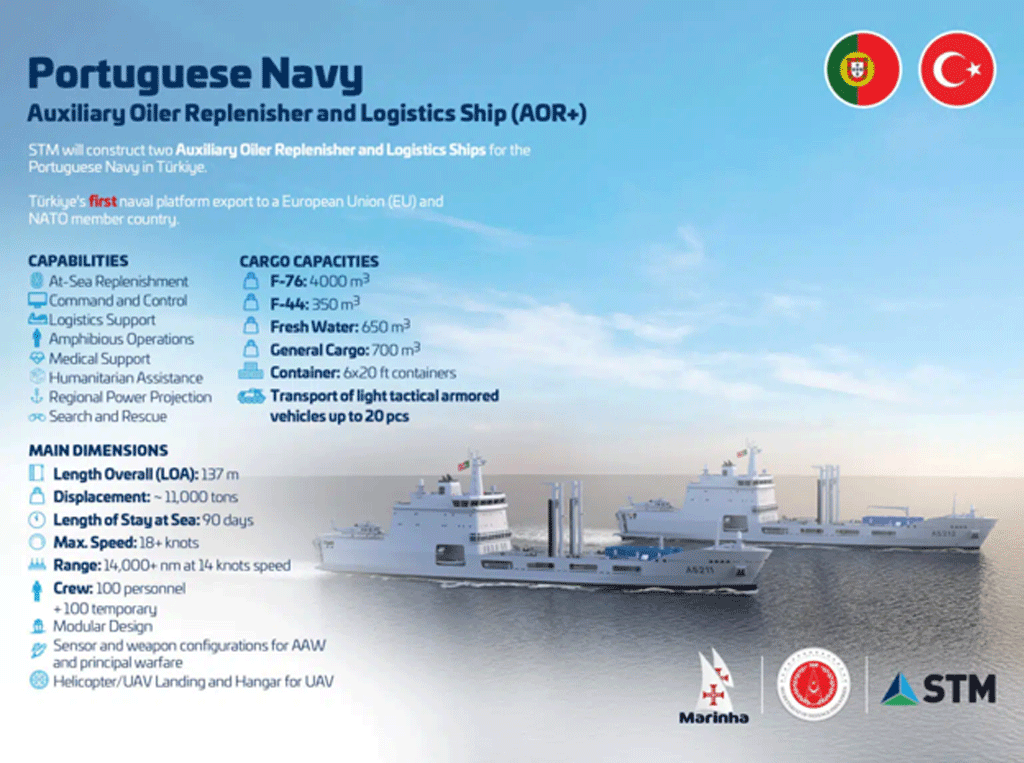
OSI Maritime Systems (OSI) is pleased to announce that it has been awarded a contra by STM Savunma Teknolojileri Mühendislik ve Ticaret A.Ş. (STM) to deliver Integrated Navigation and Tactical System bridges for the Portuguese Navy’s two new Auxiliary Oiler Replenisher and Logistics Ships (AOR+). The ships, being built in STM’s shipyard in Turkey, will significantly enhance the Portuguese Navy’s capabilities. supporting joint force projection, amphibious operations, and replenishment at sea.
With a modular design, the AOR+ will not only provide logistical support and transfer fuel and cargo but also transport armored vehicles, equipped to undertake humanitarian aid, search and rescue, and medical missions during crises. Fitted with an Integrated Communication System, the ships will have command and control capabilities that will enable efficient fleet coordination.
This contract follows the 2024 contract to deliver INTS onto the Portuguese Navy’s new Multifunctional Naval Platform (NRP D. João II) being built by Damen Shipyards, a contract by the Portuguese Navy to deploy ECPINS software Fleetwide and earlier this year, a contract for the 6 new NPO3S / OPV Batch 3 being built by WestSea shipyard. The integrated bridge system will be powered by OSI’s ECPINS 7 software, developed to be fully compliant with the latest NATO STANAG 4564 Edition 3 standard and built to fully meet the IMO MSC.252(83) Integrated Navigation System standard, a key requirement for the Navy, with the additional benefit of being able to support paperless navigation.
OSI’s ECPINS software is more than just fully compliant WECDIS. Among the additional ECPINS capabilities contracted are the provision of the GNSS Denied capability and the Ship Helicopter Operating Limits (SHOL) modules. The GNSS denied capability, developed originally for submarine navigators operating dived without GPS, is fast becoming essential for surface navigators. Operating in challenging environments, it enables the accurate determination of own ship position in circumstances where a position fix derived from a global navigation satellite system is not available or unreliable due to spoofing, jamming, signal obstruction, or a lack of satellites.
