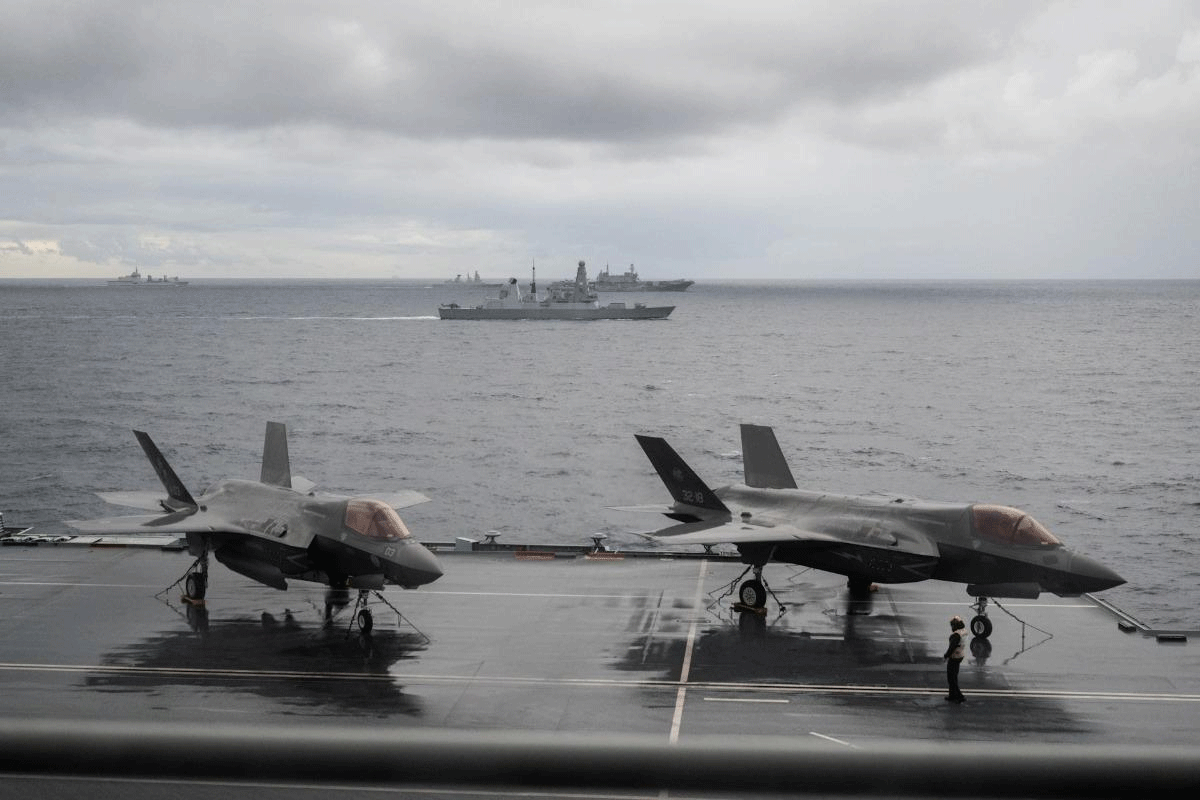
NATO recently released an update to the Alliance maritime strategy that provides a framework for Allied maritime security across the Euro-Atlantic region. The strategy will help steer the transformation efforts of the Alliance with renewed emphasis on collective defense.
“The Alliance Maritime Strategy provides a framework for NATO to address threats and challenges in the maritime domain across the Euro-Atlantic region,” said Vice Admiral Mike Utley, Commander, Allied Maritime Command (MARCOM). “From deterrence and defense, crisis prevention, and management, to cooperative security, NATO’s maritime forces provide integral and credible combat power for the Alliance that underpins our collective defense. This strategy will guide Allied efforts to strengthen capabilities, leverage emerging technology, enhance lethality, and prevail in conflict.”
Maritime security is vital to peace and prosperity. The world is connected by its oceans and seas, which are essential to ensure global commerce and our way of life. Maritime crises and incidents illustrate the importance of the maritime domain to NATO as a transatlantic Alliance. NATO is united and steadfast in its resolve to protect its one billion citizens and therefore must be prepared to “fight tonight” and “fight tomorrow.” Its key purpose and greatest responsibility are to ensure our collective defense against all threats, from all directions.
NATO maritime forces, which include reach, power projection, poise, versatility and readiness, have scalable utility across peacetime, crisis and conflict. Defending NATO populations, forces and territory requires rapid adaptation of Allies’ maritime capabilities, to ensure that current forces are prepared to fight into the next decade.
NATO is operating in an increasingly complex and contested security environment, shaped by global strategic competition, instability, and frequent shocks. The Alliance faces two principal threats: Russia and terrorism. Russia remains the most significant and direct threat to Euro-Atlantic security, seeking to reshape the regional order through coercion, aggression, hybrid actions, and a rapid military build-up across all domains, including a growing maritime presence from the Baltic and Black Seas to the High North. At the same time, terrorism continues to pose the most direct asymmetric danger to Allied populations, with networks expanding their reach, technology, and ability to disrupt global security and maritime activity.
Beyond these core threats, the People’s Republic of China (PRC) is increasing its global military footprint, pursuing naval expansion, and deepening its strategic alignment with Russia, a partnership which challenges the rules-based international order. Other authoritarian actors are also investing in advanced capabilities that erode stability and transparency.
Compounding these security pressures, climate change and emerging technologies are transforming the maritime domain. Melting sea ice, new shipping lanes, and disruptive technologies such as autonomous systems, hypersonic missiles, and AI-enabled platforms are reshaping how states project power at sea. These dynamics create a more demanding operating environment, and one that requires NATO to adapt, strengthen deterrence, and ensure readiness across every domain.
It is against this background that NATO has published an updated maritime strategy, in line with existing NATO policy, to demonstrate how Alliance maritime power addresses threats and challenges from all directions, based on NATO’s 360-degree approach. It also contributes to the fulfilment of its three core tasks: deterrence and defense; crisis prevention and management; and cooperative security. This Strategy provides an overarching reference for delivering maritime power that contributes to achieving NATO’s objectives both now and into the next decade.
Maritime power is central to NATO’s deterrence, defense, crisis-response, and cooperative security. At sea, the Alliance delivers credible nuclear deterrence, ensures freedom of navigation, secures sea lines of communication, and protects critical undersea infrastructure. NATO’s naval forces provide hard power, rapid response, and the ability to project force at scale, supported by evolving technologies, multi-domain integration, and resilient logistics.
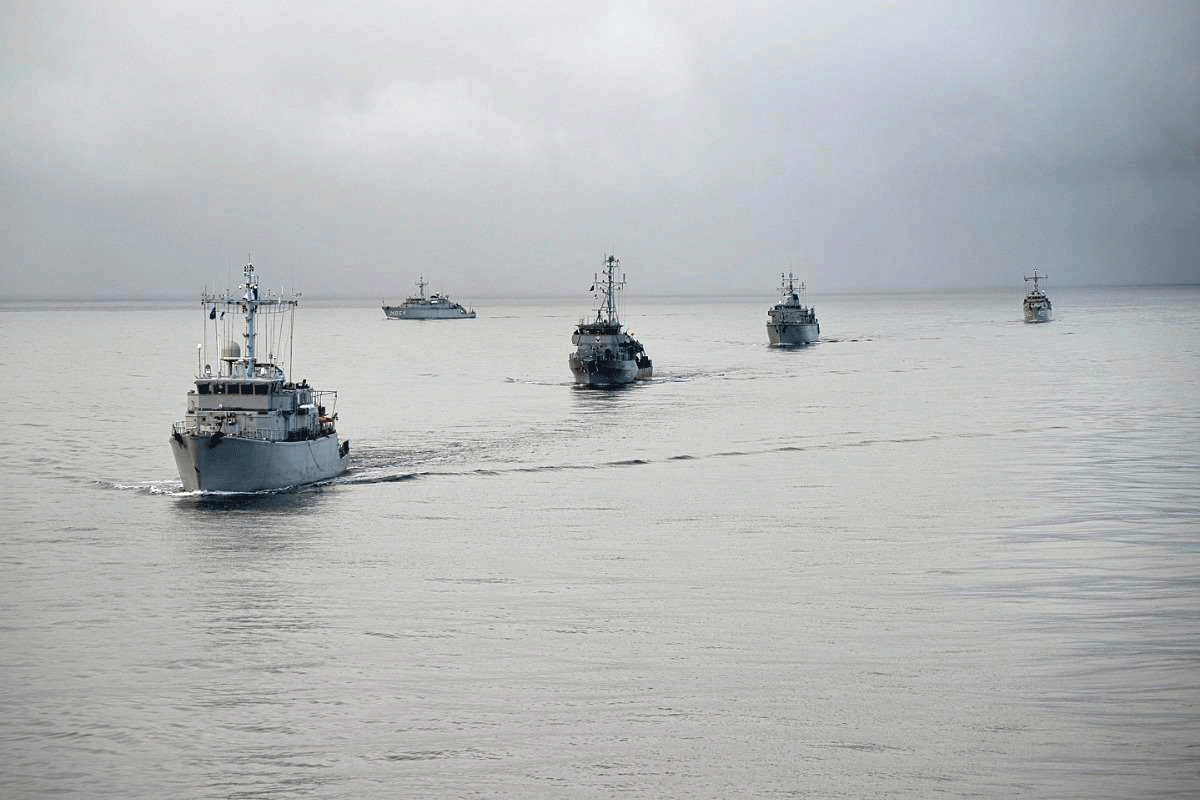
To maintain this edge, NATO is strengthening high-end capabilities such as carrier strike, anti-submarine warfare, naval mine warfare, autonomous systems, and precision strike. Maritime forces also play a flexible role in crisis management, from deterrence and maritime interdiction to humanitarian assistance and disaster relief.
Partnerships and international cooperation further expand NATO’s reach and resilience. Through exercises, capacity-building, and engagement with global maritime organizations, Allied navies help to uphold the rules-based international order, improve shared awareness, and promote stability at sea.
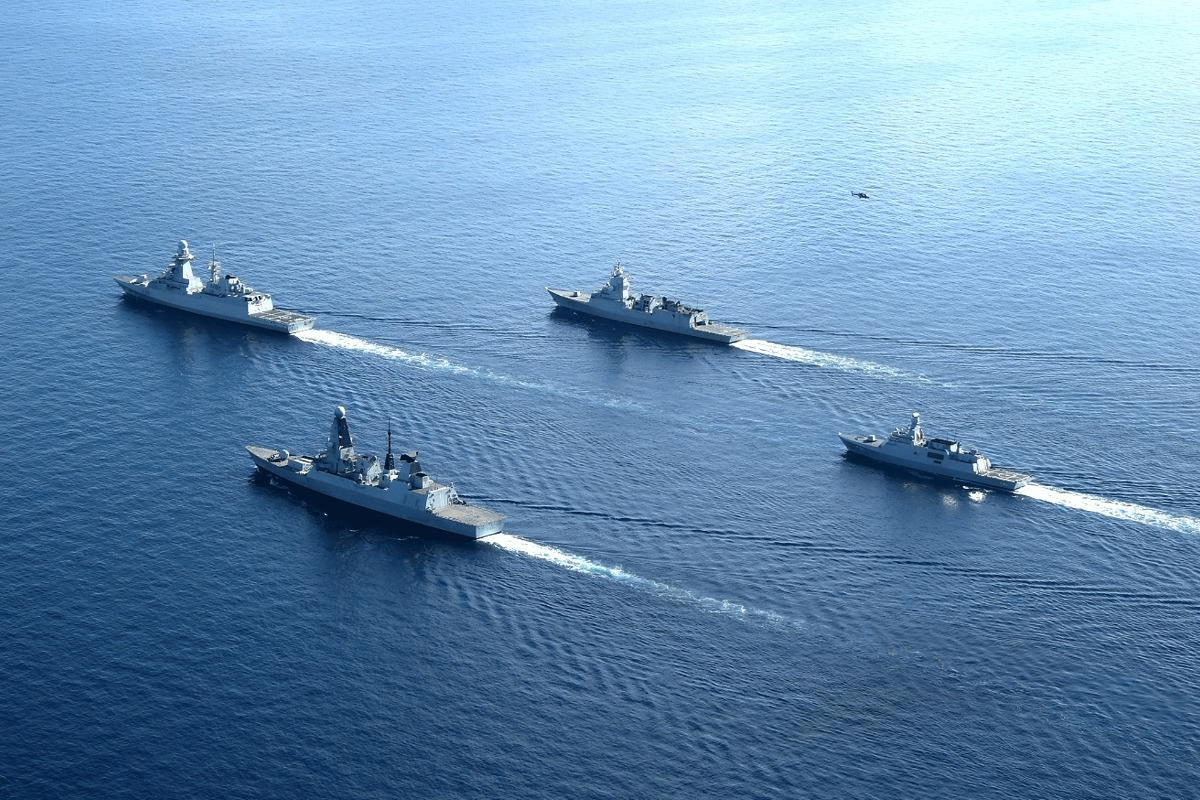
NATO will put its maritime strategy into action by boosting the readiness, resilience and reach of Allied naval forces. Standing Naval Forces will remain the Alliance’s forward, flexible instrument, demonstrating resolve, deterring threats, and supporting operations across all domains.
Allies will enhance their ability to deter, detect, and respond to maritime threats, including those targeting critical undersea and offshore infrastructure. This includes improving information-sharing, incident tracking and attribution, and integrating innovative technologies for surveillance and situational awareness. These actions will be supported by closer coordination with civilian and commercial partners.
Stronger cross-domain command and control, powered by digital transformation and emerging technologies, will give commanders faster, more informed decision-making. A renewed training and exercise regime will focus both on immediate readiness and long-term force development, using Standing Naval Forces as a testbed for innovation.
Through the NATO Defence Planning Process (NDPP) and increased defense investment, Allies will deliver the next generation of maritime capabilities while strengthening defense industry cooperation and reducing trade barriers. Clear, consistent strategic communication will reinforce NATO’s message of capable maritime forces safeguarding Allied security and unity at sea.
